

Overview
A SMAS face lift is one of the most advanced facelift techniques in modern plastic surgery. Unlike traditional facelift methods that focus mainly on tightening the skin, the SMAS approach works on a deeper layer of facial tissue known as the superficial musculoaponeurotic system (SMAS). This layer is responsible for facial structure, expressions, and natural contours. By addressing this foundation rather than just the skin, SMAS face lift procedures provide results that look natural and last longer.
In recent years, patients who search for what is SMAS facelift are often those who want a rejuvenated and youthful appearance without looking “overdone.” The procedure has become popular among both men and women who want to reverse visible signs of aging such as sagging cheeks, jowls, and looseness in the neck area.
Table of Contents
What Is a SMAS Face Lift?
The SMAS facelift is a surgical technique designed to reposition the deeper structures of the face while also tightening the skin. The surgeon carefully lifts and repositions the SMAS layer, which lies beneath the skin and fat but above the deeper facial muscles. By manipulating this supportive layer, surgeons can achieve natural rejuvenation instead of creating a stretched or artificial appearance.
Many patients mistakenly believe that all facelifts are the same, but the SMAS method has unique advantages. It specifically targets facial drooping at its root cause. Skin aging is not only due to surface wrinkles but also the weakening of connective tissues and deeper facial structures. The SMAS facelift addresses both issues, providing a comprehensive solution.
The Meaning of SMAS in Plastic Surgery
SMAS stands for superficial musculoaponeurotic system, which is a complex network of fibrous tissue and muscles. This layer plays a major role in facial expressions and overall facial tone. As we age, the SMAS begins to weaken and sag, leading to drooping cheeks, deep nasolabial folds, and a poorly defined jawline.
Traditional facelifts that work only on the skin cannot fully correct these changes because they fail to address the deeper supportive structures. By working directly with the SMAS layer, surgeons are able to reposition sagging tissues, restore youthful contours, and create results that look authentic.
In plastic surgery, the SMAS is considered a crucial anatomical plane. Surgeons who are highly trained in this technique understand how to manipulate it safely to achieve both aesthetic improvement and long-term stability.
How the SMAS Technique Differs From Traditional Facelift
The main difference between a traditional facelift and a SMAS face lift lies in the depth of correction. A traditional facelift focuses on pulling and tightening the skin, which can sometimes lead to an unnatural, “windblown” appearance. The SMAS technique, however, goes deeper. By repositioning the SMAS layer itself, the skin can be redraped smoothly without excessive tension.
This deeper adjustment means that results last longer because the lift does not rely solely on the skin’s elasticity. Patients who undergo the SMAS facelift often notice improvements not just in surface wrinkles but in the structure of their cheeks, jawline, and neck. The approach also allows surgeons to address each patient’s unique facial anatomy, making the results more personalized.
Another advantage of the SMAS facelift is durability. While a skin-only facelift may begin to loosen within a few years, a properly performed SMAS facelift often maintains a youthful look for a decade or more. This makes it one of the most effective options for patients seeking long-term results.
Benefits of SMAS Face Lift
A SMAS face lift offers multiple benefits that set it apart from less advanced facelift techniques. Patients often seek this procedure because it provides a balance between natural-looking rejuvenation and long-lasting results. Unlike quick skin-tightening treatments that may fade in a short time, the SMAS approach delivers deeper structural correction.
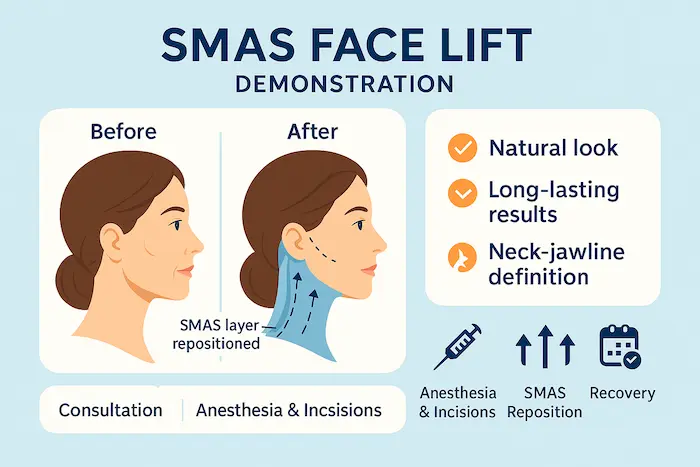
Natural and Long-Lasting Results
One of the most important benefits of a SMAS facelift is its ability to deliver natural results. Because the procedure addresses the deeper supportive layer of the face rather than just the skin, the outcome avoids the “pulled” or “stretched” look that is sometimes associated with older facelift methods. Patients are often told they look refreshed, rested, and youthful rather than surgically altered.
In addition to being natural, the results are also long-lasting. By repositioning the SMAS, surgeons ensure that the improvements remain stable for many years. On average, patients can expect their rejuvenated appearance to last 10 years or longer, depending on skin quality, lifestyle habits, and overall health.
Improved Jawline, Neck, and Midface Contours
Aging affects more than just the surface of the skin. Gravity, loss of collagen, and weakening of the SMAS layer lead to sagging in key areas such as the jawline, neck, and midface. A SMAS face lift directly addresses these concerns by tightening and repositioning tissues in these regions.
- Jawline: The procedure reduces jowls and restores a sharp, youthful jaw contour.
- Neck: Loose skin and vertical bands are corrected, improving the angle between the chin and neck.
- Midface: Drooping cheeks and deep nasolabial folds are lifted, giving the face a more balanced, youthful appearance.
These improvements are comprehensive, which is why many patients choose SMAS over less invasive facelift options.
Why Patients Choose SMAS Face Lift
Patients typically select the SMAS facelift because it provides both visible and structural improvements. Many individuals in their 40s, 50s, and 60s want more than what non-surgical treatments can achieve, yet they still want results that look natural. The SMAS approach gives them confidence that their facial rejuvenation will not only be subtle but also effective.
The psychological benefits should not be overlooked either. Many patients report feeling more confident in both professional and social settings after undergoing the procedure. This emotional lift often complements the physical results, making the surgery a transformative experience.
SMAS Face Lift Procedure Step by Step
Understanding the surgical process helps patients prepare mentally and physically for the experience. Although techniques may vary depending on the surgeon, the procedure typically follows these stages.
Initial Consultation and Planning
The journey begins with a detailed consultation. During this appointment, the surgeon evaluates the patient’s medical history, facial anatomy, and personal goals. Advanced imaging or photography may be used to plan the most effective approach. This is also the stage where patients ask questions about recovery, risks, and SMAS face lift cost, allowing them to make informed decisions.
Anesthesia and Incision Techniques
On the day of surgery, patients are usually placed under general anesthesia or local anesthesia with sedation. This ensures comfort and safety throughout the operation.
The surgeon then makes discreet incisions around the hairline, temples, and near the ears. These incisions are carefully placed to remain hidden once healed. Through these access points, the surgeon lifts and repositions the SMAS layer, tightening underlying tissues before redraping the skin smoothly over the new structure. Excess skin may be removed to create a refined finish.
Recovery Process and Healing Timeline
Recovery from a SMAS facelift varies from person to person, but most patients can expect to return to normal activities within two to three weeks. During the first few days, swelling and bruising are common, but these gradually subside. Surgeons often recommend keeping the head elevated and avoiding strenuous activities for optimal healing.
Most patients feel comfortable attending social or work events within a month, and the final results continue to improve as the face settles into its rejuvenated form. Importantly, because the SMAS layer is repositioned, patients enjoy results that not only look natural but also last significantly longer than skin-only facelifts.
Who Is a Good Candidate for SMAS Face Lift?
Not everyone seeking facial rejuvenation will automatically be the right candidate for a SMAS face lift. This surgical technique is designed for individuals who show moderate to significant signs of aging and who want results that are both natural and long-lasting. Identifying whether someone is a suitable candidate depends on age, skin quality, health status, and realistic expectations.
Ideal Age and Skin Condition
Most patients who undergo a SMAS facelift are typically in their mid-40s to late 60s. During this age range, facial tissues begin to lose elasticity, and sagging in the cheeks, jawline, and neck becomes more pronounced. Younger patients in their 30s may benefit from less invasive procedures, while older individuals with advanced skin laxity may still be candidates if their overall health is strong.
Skin condition also plays an essential role. Patients with good skin elasticity, moderate sagging, and strong bone structure often experience the best results. Even if fine lines and wrinkles are present, the SMAS facelift targets deeper tissue, making it effective for restoring definition and balance.
Health Considerations Before Surgery
Good overall health is crucial for successful surgery and smooth recovery. Patients should not have uncontrolled medical conditions such as high blood pressure, diabetes, or heart disease. Non-smokers generally heal better and are less prone to complications, while smokers are advised to quit several weeks before and after surgery to promote proper healing.
A psychological component is also important. Patients should have realistic expectations and understand that while the procedure creates significant improvements, it does not stop the natural aging process. A SMAS face lift should be viewed as a way to “reset the clock” rather than freeze it.
SMAS Face Lift Cost
One of the most common questions patients ask is about the SMAS face lift cost. Prices can vary widely depending on location, surgeon expertise, and additional medical services provided. Understanding these factors helps patients plan realistically for their treatment.
Factors Affecting the Price
Several elements influence the overall cost of a SMAS facelift:
- Surgeon’s Expertise: Highly experienced surgeons who specialize in advanced facelift techniques may charge higher fees.
- Clinic or Hospital Facilities: Accredited hospitals and clinics with modern technology often include higher-quality care in their pricing.
- Geographic Location: Costs differ significantly from one country to another. Western Europe and the United States generally have higher price ranges compared to Turkey.
- Additional Services: Pre-operative tests, anesthesia, aftercare, and medications can add to the total expense.
These factors combined determine the final amount a patient can expect to pay.
Average SMAS Face Lift Cost in Turkey vs. Other Countries
Turkey has become one of the leading destinations for cosmetic surgery, and SMAS facelift cost is a major reason why. On average:
- Turkey: Prices typically range between $3,000 and $6,000, depending on the clinic and surgeon.
- United States & Western Europe: The same procedure may cost anywhere from $10,000 to $20,000.
- Middle East & Eastern Europe: Costs often fall somewhere between these two ranges.
These differences are why many international patients travel to Turkey for surgery. They can access world-class expertise at a fraction of the cost found in their home countries.
Is It Worth the Investment?
For most patients, the answer is yes. A SMAS face lift provides long-lasting results, often lasting a decade or more. When compared with the ongoing expenses of repeated non-surgical treatments such as fillers, Botox, or skin tightening devices, a one-time surgical investment may prove more cost-effective in the long term.
Moreover, the boost in self-confidence and quality of life cannot be measured purely in financial terms. Many patients feel that looking youthful and refreshed supports both their personal and professional lives, making the surgery a highly valuable investment.
Risks and Side Effects of SMAS Face Lift
Like any surgical procedure, a SMAS face lift carries certain risks and potential side effects. While complications are rare when performed by an experienced surgeon, patients should still be fully informed before undergoing surgery. Understanding the possible outcomes helps manage expectations and prepares individuals for a smoother recovery.
Short-Term Side Effects
Immediately following the procedure, patients may experience swelling, bruising, and mild discomfort. These side effects are temporary and usually subside within a couple of weeks. Pain is generally managed with prescribed medications, and cold compresses may help reduce swelling.
Other short-term side effects may include:
- Numbness or Tingling: Temporary nerve disturbance can lead to altered sensation in the face, but this typically resolves within a few weeks to months.
- Tightness of Skin: Patients may feel their face is overly tight at first, but this sensation improves as tissues settle into their new position.
- Mild Asymmetry: Slight differences in swelling during recovery can cause temporary asymmetry, which corrects as healing progresses.
Most patients return to normal social and professional activities within three to four weeks, making these short-term side effects manageable.
Long-Term Considerations
Long-term risks are less common but should be acknowledged. These include:
- Scarring: While surgeons place incisions in discreet areas, some patients may develop thicker or more visible scars depending on their skin type and healing process.
- Nerve Injury: Rarely, damage to facial nerves can occur, potentially causing weakness in certain facial muscles. With skilled surgeons, this risk is extremely low.
- Aging Process: A SMAS face lift can turn back the clock, but it cannot stop aging entirely. Over time, natural changes in skin elasticity and tissue structure will occur, though the patient will always appear younger than if they had not undergone surgery.
When performed by an experienced professional, the long-term outcome is overwhelmingly positive, and risks remain minimal compared to the benefits.
SMAS Face Lift in Turkey – Why Choose Turkey for Treatment?
Turkey has become one of the world’s most popular destinations for cosmetic surgery, and the SMAS face lift is among the most frequently requested procedures. Patients from Europe, the Middle East, and even North America travel to Turkey to take advantage of its medical expertise, affordability, and high-quality care.
Expertise of Turkish Plastic Surgeons
Turkish plastic surgeons are renowned for their advanced training and international experience. Many of them have studied or practiced abroad, bringing global expertise back to Turkey. Their familiarity with cutting-edge techniques ensures that patients receive world-class treatment. Furthermore, Turkey’s high surgical volume means that many surgeons perform SMAS facelifts regularly, refining their skills to achieve consistently excellent outcomes.
Affordable SMAS Face Lift Packages
One of the main reasons international patients choose Turkey is affordability. The SMAS face lift cost in Turkey is significantly lower than in Western countries, without compromising quality. Clinics often offer all-inclusive packages covering:
- Surgeon’s fees
- Hospital or clinic costs
- Anesthesia
- Post-operative care
- Accommodation and airport transfers
This approach not only reduces the financial burden but also simplifies the patient’s journey, making the entire process stress-free.
Health Tourism and International Patient Services
Turkey has built a strong reputation in the field of health tourism. Major cities like Istanbul, Ankara, and Izmir host state-of-the-art medical facilities accredited by international organizations. These clinics often have dedicated international patient departments that provide translators, travel assistance, and personalized support throughout the patient’s stay.
Patients also enjoy the opportunity to combine their surgery with a cultural experience. Turkey offers rich history, beautiful landscapes, and world-famous hospitality, making recovery not just a medical process but also a memorable journey.
Conclusion – Is SMAS Face Lift Right for You?
Deciding whether a SMAS face lift is the right procedure depends on several personal factors, including your age, skin condition, health status, and expectations. This advanced surgical technique has become the gold standard in facial rejuvenation because it not only improves surface appearance but also corrects deeper structural changes caused by aging. For many patients, it provides the perfect balance between natural aesthetics and long-lasting results.
The first question most people ask is, what is SMAS facelift and why is it different from a traditional facelift? The answer lies in the unique approach of targeting the superficial musculoaponeurotic system rather than just tightening the skin. By addressing this foundation, surgeons can restore youthful contours in the jawline, midface, and neck without creating an artificial look. Patients often hear from friends and family that they look “rested” or “younger” without anyone suspecting they underwent surgery.
Another major consideration is the SMAS face lift cost. While the investment is higher than non-surgical treatments such as fillers or Botox, the longevity of results makes it worthwhile. Instead of repeating minor procedures every few months, patients can enjoy 10 years or more of rejuvenation from a single surgery. When performed in Turkey, the procedure becomes even more appealing, as patients benefit from world-class expertise at an affordable price compared to Western countries.
When evaluating if the SMAS facelift is right for you, consider the following points:
- Degree of Aging: If you are experiencing moderate to significant sagging in the cheeks, jawline, or neck, this technique may be ideal. Patients with mild aging may benefit more from less invasive options.
- Health Status: Being in good overall health is essential for a safe procedure and smooth recovery. Non-smokers and those without chronic health conditions usually have the best outcomes.
- Personal Goals: If your goal is to look naturally refreshed without appearing surgically altered, the SMAS facelift aligns well with this expectation.
- Commitment to Recovery: While the initial downtime is two to three weeks, patients should be prepared to follow aftercare instructions carefully for the best results.
One of the most valuable aspects of the SMAS technique is its psychological benefit. Many patients report an increase in confidence and a more positive outlook on life after their surgery. Looking in the mirror and seeing a younger version of themselves often leads to improved self-esteem, which impacts both professional and social interactions.
For international patients, choosing SMAS face lift in Turkey adds even more value. The combination of skilled surgeons, modern facilities, affordable pricing, and comprehensive patient support makes Turkey one of the top destinations for this procedure. Health tourism services ensure that patients not only receive top-level medical care but also enjoy a comfortable and supportive journey from start to finish.
In conclusion, the SMAS facelift is one of the most effective ways to achieve long-term facial rejuvenation. It is suitable for individuals who want natural results, structural improvement, and a youthful appearance that lasts for many years. If you are considering this procedure, scheduling a consultation with an experienced plastic surgeon is the best next step. During this evaluation, you can discuss your goals, review your medical history, and determine if the SMAS facelift is truly the right choice for you.
Ultimately, a SMAS face lift is more than just a cosmetic procedure it is an investment in yourself, your confidence, and your future. With the right surgeon and proper care, it has the power to restore not only your youthful features but also your sense of vitality and well-being.
FAQs About SMAS Face Lift
How long does a SMAS face lift surgery take?
A SMAS face lift usually takes between 3 to 5 hours, depending on the complexity of the procedure and whether it is combined with other treatments.
How soon can I return to work after a SMAS face lift?
Most patients return to desk jobs within two to three weeks. However, recovery time may vary depending on individual healing speed and lifestyle.
Can SMAS face lift be combined with other procedures?
Yes, many patients combine it with eyelid surgery, brow lift, or fat transfer for more comprehensive facial rejuvenation.
Are the results of a SMAS face lift permanent?
No facelift can stop aging, but SMAS face lift results typically last 10 years or longer, making it one of the most durable facelift techniques.
Will I have visible scars after a SMAS face lift?
Incisions are strategically placed around the hairline and ears to remain discreet. With proper healing, scars usually become barely noticeable.